
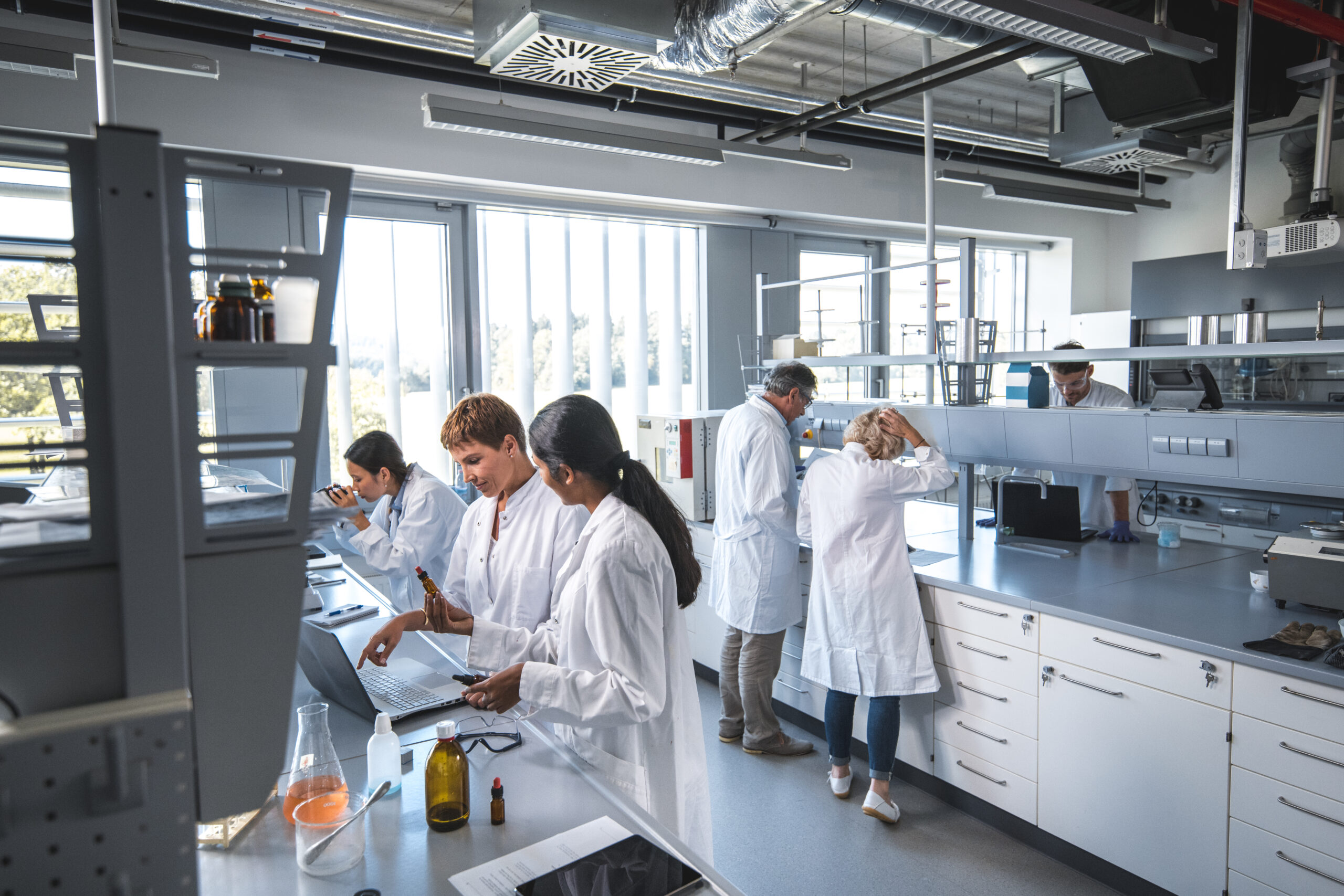
Bodo Möller Chemie operates a global network of testing laboratories, including several certified adhesive testing laboratories in Europe and China that specialize in independent, manufacturer-neutral adhesive testing, adhesive analysis, and technical consulting. We help customers select, validate and optimize adhesive solutions through mechanical, chemical and environmental testing under real application conditions. Our laboratories test adhesives, sealants and advanced polymer materials to support optimzied product selection and long-term bonding performance.

50+
years application experience

10+
years adhesive testing laboratory

1000+
tested applications

Certified
EN 17460 & ISO 21368
Your benefits at a glance
Informed adhesive decisions, backed by data
Choosing the right adhesive is critical for product performance, durability, and manufacturing efficiency. Our adhesive testing laboratories help you make informed decisions through independent testing and scientific analysis.
Key Benefits
- Manufacturer-independent adhesive selection focused on the best solution for you
- Reduced risk of adhesive failure and material incompatibility
- Testing under real application conditions
- Tailored testing solutions for your specific application
- Reliable results based on standardized test methods
- Support in product selection and process optimization
- Expert technical consulting throughout your project
Why Bodo Möller Chemie
- More than 50 years of expertise in adhesive applications
- Certified adhesive bonding laboratories operating according to internationally recognized standards
- Comprehensive mechanical, chemical, and environmental testing under one roof
- Unique combination of chemical expertise and industrial application know-how
- Proven expertise across demanding industrial sectors
- Highly qualified laboratory and adhesive bonding specialists



Our services
Testing, analysis and consulting under one roof
Whether you are developing a new product, optimizing a production process, or investigating a bonding failure, our laboratories test adhesives, sealants, and advanced polymer materials to provide the data and expertise needed for informed product selection and application decisions. Our independent testing, manufacturer-neutral consulting, and technical expertise help you identify, select, and validate the right solution. Bodo Möller Chemie offers comprehensive laboratory services throughout the complete lifecycle of adhesive joints.

Technical consulting
Our Bodo Möller Chemie experts support you from the earliest stages of your project through production optimization.
- Analysis of substrates
- Selection of suitable adhesives
- Process development
- Material compatibility

Mechanical testing
Mechanical testing evaluates the strength, durability and load-bearing performance of adhesive bonds under defined conditions such as tensile, shear and peel loads.
- Lap shear tests / tensile tests
- Bead peel-off test (peel-off test)
- 90° Peel Test
- Pull-off test for paint (or adhesion test)
Chemical testing
Chemical analyses provide valuable insights into the composition, curing behaviour and material properties of adhesives and polymers.
- Differential Scanning Calorimetry (DSC)
- Dynamic Mechanical Thermal Analysis (DMTA or DMA)
- Fourier Transform Infrared (FTIR) spectroscopy
- Nuclear magnetic resonance spectroscopy (NMR spectroscopy)
- ICP-OES (Inductively Coupled Plasma Optical Emission Spectroscopy)
- Gas Chromatography (GC)
- High-Performance Liquid Chromatography (HPLC)
- Scanning Electron Microscopy with Energy Dispersive X-ray Spectroscopy (SEM-EDX)
Age & environmental testing
Environmental and accelerated aging tests simulate real operating conditions to evaluate the long-term durability of adhesive bonds. By exposing samples to temperature changes, humidity, UV radiation or corrosive environments, we assess how materials perform throughout their service life.
- Thermal Cycling
- Elevated Temperature Aging
- Exposure to Water and Other Liquids
- High Humidity and Elevated Temperature Exposure
- UV Exposure Testing
- Salt Spray Corrosion Testing

Process optimization
Reliable bonding depends not only on the adhesive itself but also on the application process. We support customers in optimizing dispensing technologies, identifying process deviations and improving production efficiency.
- Dispensing technology (1K and 2K solutions)
- Error analysis / troubleshooting
Industries
Trusted across demanding industrial sectors
Bodo Möller Chemie supports customers across numerous industries.
Aerospace
Aerospace applications require reliable adhesive bonds under extreme environmental conditions. Our certified adhesive testing laboratories validate bonding solutions for lightweight structures, composite materials and safety-critical components through mechanical, chemical and environmental testing.
Automotive
We support automotive manufacturers and suppliers with adhesive testing, material validation and process optimization for structural bonding, lightweight construction and high-performance vehicle components. Our laboratories evaluate adhesive performance under mechanical loads, temperature and environmental influences.
Bus & truck
Heavy-duty commercial vehicles require durable adhesive bonds that can withstand constant vibration, dynamic loads and harsh environmental conditions. Our laboratories validate adhesive systems through comprehensive testing to ensure reliable performance and long-term durability under demanding real-world operating conditions.
Chemicals
Chemical processing equipment and components are often exposed to aggressive substances and demanding operating environments. Our laboratories perform chemical analysis, adhesive testing and environmental aging tests to evaluate long-term material performance and chemical resistance.
Construction & building materials
Construction materials are exposed to demanding environmental conditions for many years. Our laboratories validate adhesive systems through mechanical testing, weathering simulations and long-term durability assessments.
Defense
Defense and military applications require highly reliable adhesive bonds under extreme environmental and mechanical conditions. Our certified adhesive testing laboratories support manufacturers with adhesive validation, durability testing and material qualification for mission-critical components.
Electronics
Electronic components require precise adhesive selection to ensure electrical insulation, thermal management and long-term reliability. Our laboratories support manufacturers through adhesive testing and material analysis.
Energy & renewable energy
Wind energy, battery systems and photovoltaic applications require reliable adhesive bonding over long service lives. Our laboratories evaluate adhesive durability under thermal, mechanical and environmental stress.
Food
Food processing and packaging applications require durable adhesive bonds that withstand cleaning processes, moisture and temperature fluctuations. Our adhesive testing laboratories support manufacturers in validating bonding solutions for packaging systems and production equipment.
Furniture manufacturing
We help furniture manufacturers optimize adhesive selection for wood, engineered panels, plastics and decorative surfaces. Independent testing improves product durability and manufacturing efficiency.
General industry
Manufacturers across a wide range of industries use our adhesive testing laboratory to reduce development risks, improve product quality and validate reliable bonding solutions before production.
Home appliance manufacturing
Household appliance manufacturers rely on durable adhesive joints for efficient production and long product life. Our adhesive testing services evaluate bonding performance across metals, plastics and coated surfaces.
Machinery & equipment manufacturers
Industrial machinery is exposed to continuous mechanical stress, vibration and demanding operating conditions. Our laboratories validate adhesive systems through mechanical testing, environmental aging and failure analysis to improve product reliability and service life.
Marine & shipbuilding
Marine environments expose bonded joints to moisture, salt and temperature fluctuations. Our environmental aging tests validate adhesive systems for demanding marine applications.
Packaging
Packaging manufacturers benefit from independent adhesive testing to optimize production processes, evaluate material compatibility and ensure reliable bonding performance for flexible and rigid packaging solutions.
Paints, coatings & protective surface systems
We help manufacturers of paints, coatings and protective surface systems evaluate adhesion performance, material compatibility and coating durability. Our laboratories combine adhesive analysis with mechanical and chemical testing to optimize product development.
Pharmaceuticals
Pharmaceutical manufacturers require reliable bonding solutions for equipment, medical devices and production environments with strict quality requirements. Our laboratories support adhesive testing, material compatibility studies and process validation to ensure consistent product performance.
Plastics & advanced composites
We test adhesive compatibility with engineering plastics, fibre-reinforced composites and advanced polymer materials. Our laboratories support manufacturers in developing lightweight, durable and high-performance bonded structures.
Rail
We provide adhesive testing services for railway manufacturers and suppliers in accordance with demanding industry standards like DIN EN 45545-2 . Our laboratories support material qualification, durability testing and adhesive validation for rail vehicle applications.
Recycling & material recovery
Recycling technologies involve a wide variety of materials that require reliable separation, bonding or repair solutions. Our adhesive consulting and laboratory testing help manufacturers evaluate adhesive compatibility, material behaviour and process optimization for sustainable recycling applications.
Sports & recreational equipment manufacturing
Manufacturers of sports and recreational equipment rely on lightweight, durable bonded assemblies to improve product performance and safety. Our adhesive testing services evaluate adhesive strength, environmental resistance and long-term durability for composite materials, plastics and metals.
From first inquiry to test report
01
Initial inquiry
Submit a non-binding inquiry via email or phone to discuss your application.
Initial consultation
Our specialists evaluate your requirements and discuss possible testing strategies.
Needs analysis & proposal
Together we define the objectives and test methods before preparing a detailed proposal.
Laboratory testing
Our laboratory performs the required mechanical, chemical and environmental analyses.
Official test report
You receive a comprehensive laboratory report documenting all test results.
Evaluation & interpretation
Upon request, our experts interpret the results and recommend the most suitable adhesive solution.
Technical equipment
Modern testing technologies
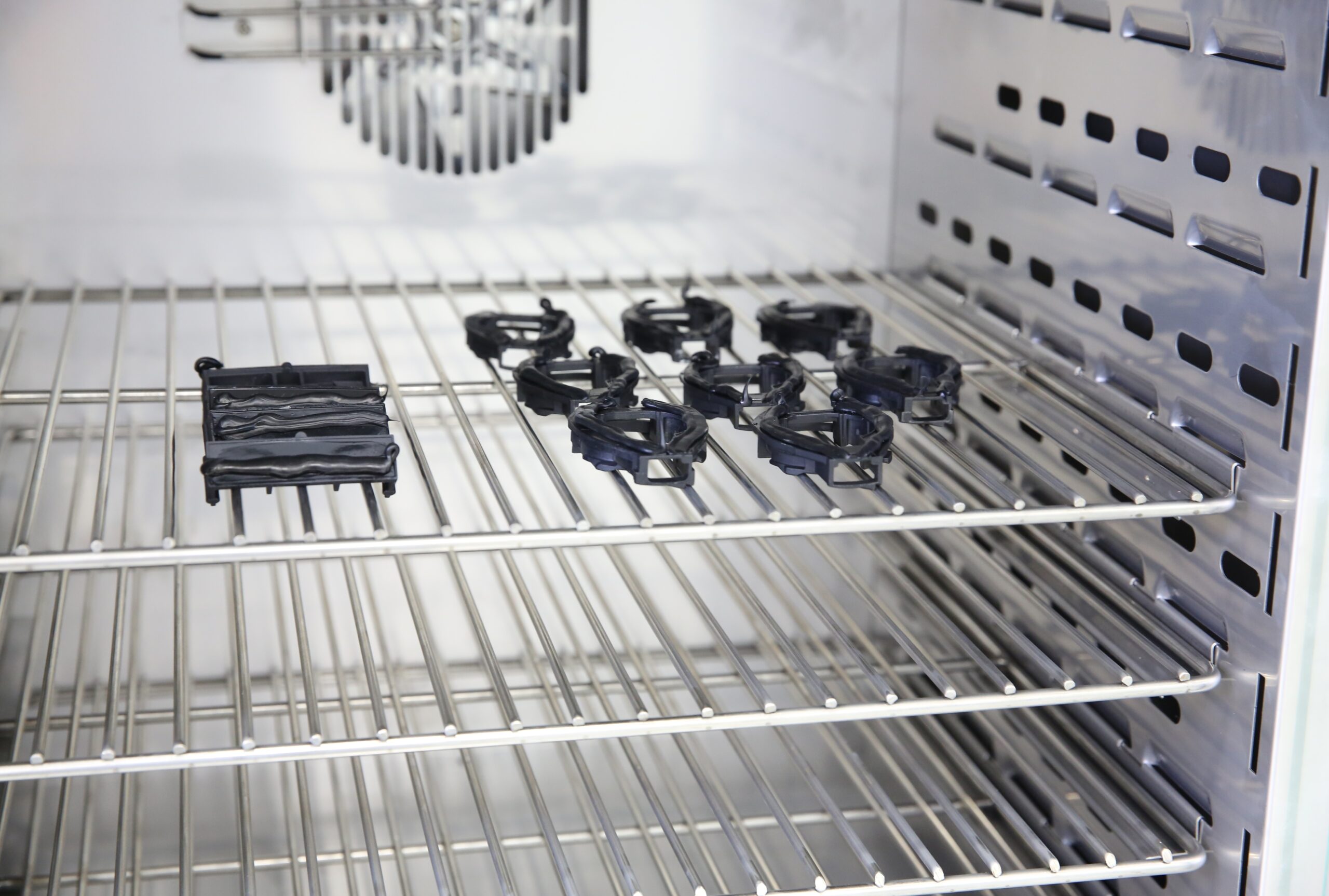
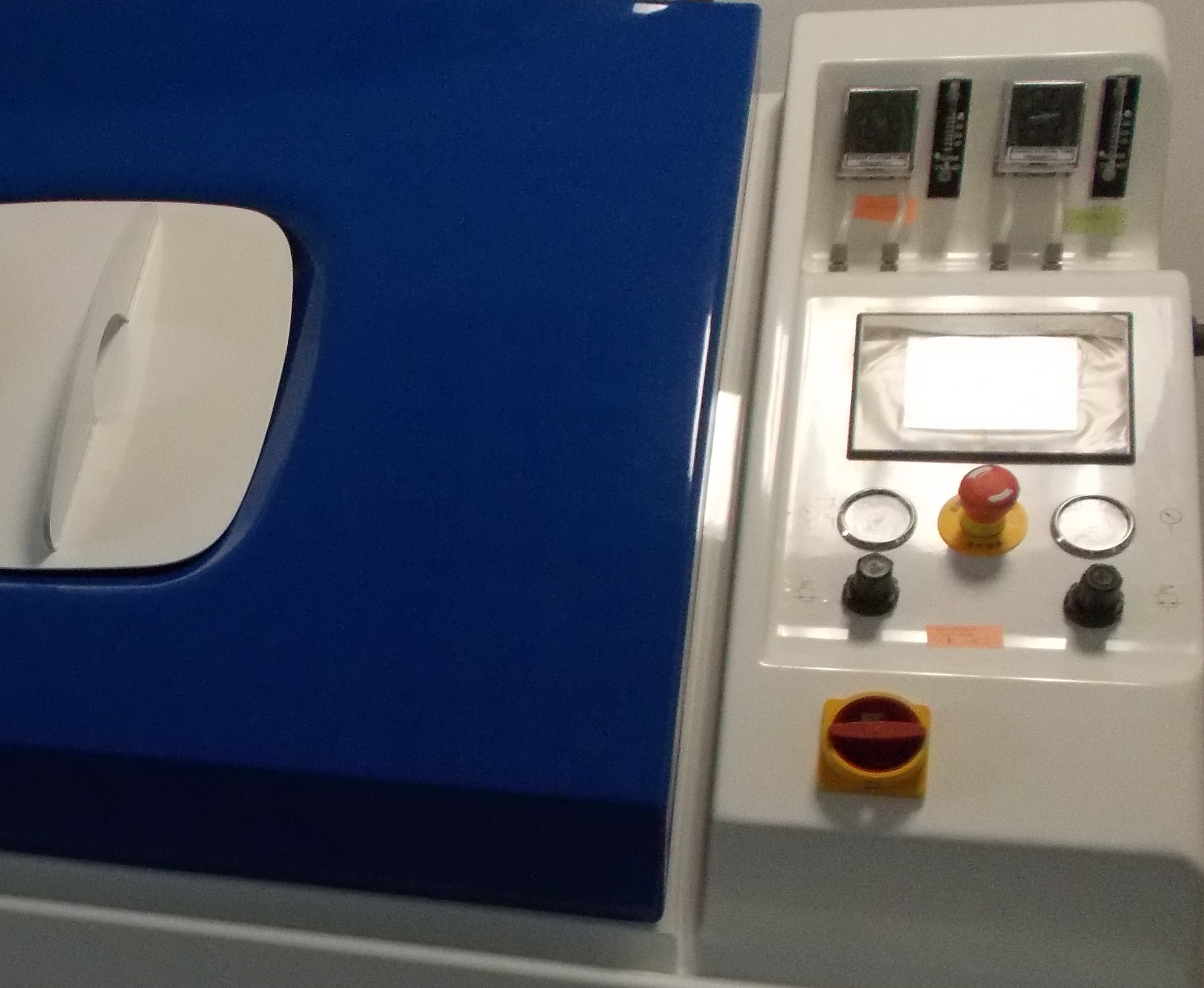
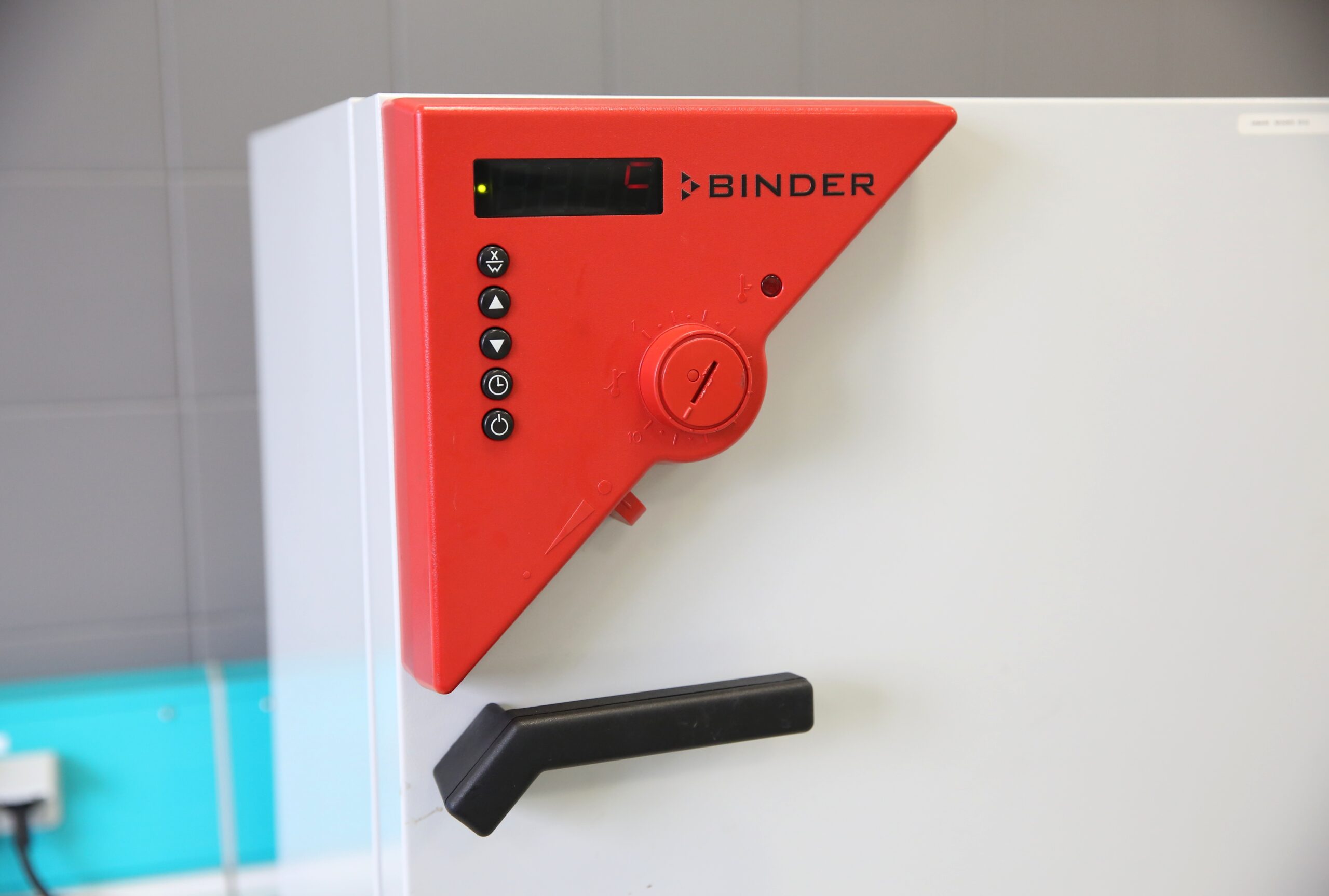
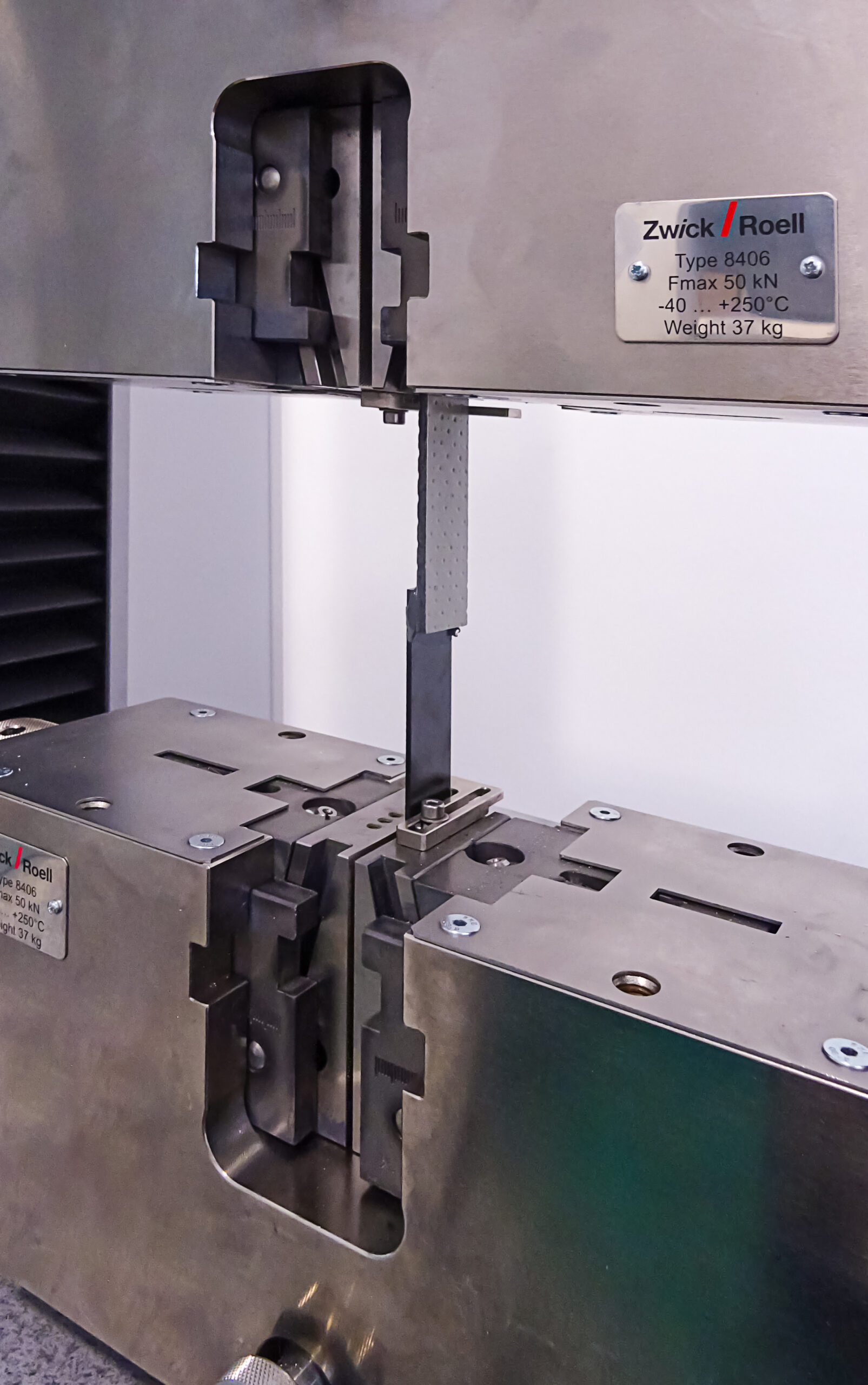
Our adhesive testing laboratories are equipped with state-of-the-art testing systems:
Binder MKF 240 Climatic Chamber
Binder ED 53 Heating Oven
Binder FB 115 Heating Oven
Ascot CCI 450 Cyclic Corrosion Chamber
Klimatest UV Test Chamber
Zwick / Roell ProLine Z050 Universal Testing Machine
Certificates
Internationally recognized standards
Certificate of Competence (CERT/Lab/2024/001)
Fulfilling the requirements of internationally recognized standards for adhesive bonding and testing:
- DIN EN 17460 – European standard for the adhesive bonding of railway vehicles and their components, ensuring the quality, safety, and reproducibility of bonded joints in rail applications.
- ISO 21368 – International standard defining quality requirements for industrial adhesive bonding processes, ensuring controlled and reliable procedures from design and manufacturing to repair, including the risk assessment of bonded joints.
- TL A-0023 – Technical delivery specification for adhesive bonding and related processes in military products. It ensures controlled processes, qualified personnel, and reliable quality assurance for safety-critical applications.
Class A1/S1 (EN 17460/ISO 21368)
Certified according to EN 17460 and ISO 21368 for the design of bonded joints in the highest joint responsibility class A1/S1. This qualification confirms our capability to design and assess safety-critical adhesive bonds according to the highest requirements.
ECARV Membership
Bodo Möller Chemie is member of the EN 17460 working group “ECARV” (European Committee for Adhesive Bonding of Railway Vehicles), supporting the advancement and standardization of adhesive bonding technologies in railway applications.
ISO 14001:2015 (Environmental management)
Ensuring responsible environmental performance and continuous improvement of sustainability-related processes.
ISO 9001:2015 (Quality management)
Ensuring reliable processes, consistent service quality, and continuous improvement across all operations.
Certificate of Competence China
No description available.
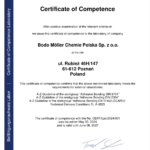
Certificate of Competence Poland
No description available.

ISO 14001:2015 Poland
No description available.

ISO 9001:2015 Poland
No description available.

EN 17460 Poland
No description available.

DIN 2304 Poland
No description available.

ISO 45001 Germany
No description available.

ISO 14001 Germany
Environmental management system.

ISO 9001 Germany
DIN EN ISO 9001 refers to the merchandised service processes and to the internal processes of the organization.
Success stories
Selected customer projects
From material selection to process optimization, our customer projects highlight our commitment at Bodo Möller Chemie to reliable bonding solutions and measurable results.
o1 I Reliable bonding of silicone rubber to powder-coated steel
The challenge
Finding an adhesive solution that provides durable adhesion to both substrates, as both are inherently difficult to bond: Silicone rubber generally requires specialized adhesive systems, while achieving reliable adhesion to powder-coated surfaces can be equally demanding.
Our approach
Our adhesive laboratory systematically analyzed the substrate combination and evaluated the key factors influencing bond performance. Based on these findings, the bonding process was developed around a suitable surface preparation and adhesive system to ensure reliable adhesion to both substrates.
The optimized process included pre-treatment of both substrates with Teroson® SB 450, followed by bonding with Loctite® 406. The resulting bond configuration was then validated through laboratory testing to assess the quality and failure behavior of the bond.
Test result
The bonded specimens showed excellent adhesion. The tests resulted in cohesive substrate failure within the silicone rubber rather than adhesive failure at the bond line.
02 I Polyporpylene Honcomb Panel Void Filler
For a customer in the mobility industry, our adhesive laboratory developed a tailored solution to reinforce lightweight polypropylene honeycomb panels and create reliable attachment points for screw connections.
The challenge
The main challenge was the inherently difficult bonding behavior of polypropylene. Its very low surface energy makes reliable adhesion challenging and requires appropriate surface preparation and adhesive strategy.
In addition to reliable adhesion, the solution needed to meet specific process requirements: a paste-like adhesive for localized application, fast curing to support efficient processing, and long-term bond stability to withstand the demands of the final application.
Our approach
Our adhesive laboratory evaluated the bonding requirements and developed a process specifically adapted to the polypropylene honeycomb structure.
The bonding process was systematically developed to address the specific surface and application requirements of the polypropylene honeycomb structure. Different factors influencing bond performance were evaluated, with particular focus on surface activation and the requirements of the local reinforcement.
Based on the laboratory evaluation, flame treatment was identified as a suitable method to activate the polypropylene surface and improve adhesion, being a fast, clean and economic process. The reinforcement concept was then developed using Araldite® AW 2101 / HW 2951, which was applied to locally fill the honeycomb cavities and create a stable foundation for the subsequent screw connections.
The result
The developed bonding process provides a targeted and robust reinforcement solution for polypropylene honeycomb panels, enabling reliable screw attachment points while maintaining the advantages of the lightweight panel construction.
o3 I Large-scale bonding of flexible, lightweight solar modules
Our adhesive laboratory was approached by a customer seeking a reliable bonding solution for the large-area bonding of flexible lightweight solar modules.
The challenge
For such applications, 1 MS polymers are commonly used. However, when applied over large surfaces, their curing process can become significantly slower. The limited access to atmospheric moisture within the bond area restricts the curing reaction and can lead to extended processing times or even to uncomplete curing.
Our approach
Our adhesive laboratory analyzed the specific requirements of the large-area application, with particular focus on the curing mechanism, processing time, and substrate compatibility.
Based on these requirements, a 2K MS polymer system was selected and its suitability for the bonding process was evaluated. Teroson® MS 9399 is not dependent on the diffusion of atmospheric moisture into the bond line and enables a faster and more predictable curing process, even when used for large-area applications. At the same time, the adhesive provides rapid initial adhesion and good adhesion to a wide range of substrates.
The result
The developed bonding approach enables reliable and more efficient large-area bonding of flexible lightweight solar modules, overcoming the curing limitations typically associated with moisture-curing 1 MS polymers.
04 I Bonding of High-Performance Polyamide Components
For a customer project involving the assembly of polyamide components, our laboratory was tasked with developing a reliable bonding process that could be integrated directly into production.
The challenge
Polyamide is highly hygroscopic, meaning that it absorbs moisture from its environment. This can make reliable adhesive bonding particularly challenging, as the moisture contained within the material can negatively influence adhesion and bond performance.
Alternative joining technologies, such as laser welding, are not suitable for every application either. Depending on the component geometry, access and design requirements, their use can be technically limited.
Our approach
Our adhesive laboratory analyzed the material characteristics and the requirements of the joining process, focusing in particular on the influence of absorbed moisture on adhesion and on how the curing conditions could be used to achieve a robust bond.
Based on the laboratory evaluation, the process was designed around a combination of surface preparation and elevated-temperature curing. The Polyamide components are first cleaned with Betaclean™ 3350 and subsequently bonded using Araldite® 2031-1. After assembly, the bonded components are transferred directly into an oven, where the adhesive is cured at 80 °C.
The elevated curing temperature enables the adhesive to develop excellent adhesion to the Polyamide substrate, while reducing the negative influence of moisture present within the amorphous regions of the polyamide.
The result
By combining suitable surface preparation with a controlled 80 °C curing process, the bonding performance can be integrated efficiently into the production process while enabling high and reliable adhesion despite the moisture-sensitive nature of polyamide.
Frequently asked questions
Answers about testing, processes, and collaboration
What is adhesive testing?
Adhesive testing evaluates the performance of adhesive bonds under defined mechanical, chemical and environmental conditions. Depending on the application, tests may measure bond strength, durability, aging resistance or chemical compatibility. The results help manufacturers select suitable adhesives, validate products and improve production processes.
Why is adhesive testing important?
Adhesive testing reduces technical risks before products reach production or the market. It helps identify unsuitable adhesive systems, optimize manufacturing processes and verify long-term durability under realistic operating conditions. Early testing minimizes costly failures, improves product quality and supports reliable product development.
Which industries benefit from adhesive testing?
Our laboratories support customers across numerous industries, including automotive, aerospace, railway, construction, electronics, packaging, renewable energy, marine, furniture, and many other industrial sectors. Wherever reliable bonded joints are required, adhesive testing helps improve performance and product reliability.
How do you select the right adhesive?
Selecting the right adhesive depends on several factors, including substrate materials, loads, operating temperatures, environmental influences, production processes and regulatory requirements. Our specialists at Bodo Möller Chemie evaluate these parameters and recommend suitable adhesive systems based on laboratory testing and application expertise.
Can you compare adhesives from different manufacturers?
Yes. At Bodo Möller Chemie our manufacturer-independent laboratories compare adhesive systems from different suppliers using identical testing conditions and standardized methods. This enables objective performance comparisons and supports informed material selection.
Can I submit my own samples?
Yes. Customers are welcome to submit components, bonded assemblies or adhesive samples for testing. To ensure the correct preparation and testing procedure, please contact the laboratory before shipping any materials. Our specialists will explain the required sample quantity, preparation and shipping instructions.
Can you develop customized test methods?
Yes. While we perform many standardized tests, we also develop customized testing procedures whenever standard methods do not adequately represent your application. Together with you, we define the objectives and test parameters to generate meaningful results for your specific product or manufacturing process.
Can you test customer-specific application conditions?
Yes. Our laboratories design testing programs that closely replicate the environmental and mechanical conditions your bonded assembly will experience in service. Depending on your application, this may include temperature changes, humidity, UV exposure, chemicals, or vibration. Testing under realistic conditions provides reliable data on long-term adhesive performance and helps reduce the risk of failures in the field.
How long does adhesive testing take?
The duration of adhesive testing depends on the selected test methods and the scope of the project. Standard mechanical tests can often be completed within a few days, while environmental aging tests require more time because they simulate long-term operating conditions. During the free initial consultation, we discuss your requirements and provide an estimated testing schedule tailored to your project.
How much does adhesive testing cost?
Every testing project is different. The cost of adhesive testing depends on the scope of the project and the testing methods required. We begin every project with a consultation to understand your objectives before preparing a transparent, project-specific quotation.
Discuss your bonding challenge with our Bodo Möller Chemie experts

Dr. Christoph Schnöll, Bodo Möller Chemie
Vice President of Technology
Downloads
Technical insights
Explore our technical resources for deeper insights into adhesive testing, bonding technologies and laboratory services.
Brochures

Klebstoffsysteme für industrielle Anwendungen
No description available.

Adhesive systems for industrial applications
No description available.

Adhesives Laboratory
No description available.

Adhesives Competence Center EN
No description available.
Technical articles
Lasting quality thanks to systematic bonding processes
Even the most powerful adhesive systems will only reach their full potential when applied correctly. Frequent mistakes such as inadequately prepared surfaces, incorrectly selected adhesive types, or improper curing conditions will produce substandard bonds, often with expensive repercussions. Anyone who wishes to achieve stable, process-reliable bonds needs to understand the entire bonding process as a functional whole: from substrate analysis and application through to controlled curing.
Read the full technical article and discover how systematic bonding processes can help ensure reliable, lasting results.
Laboratory Poland
Bodo Möller Chemie Polska Sp. z o.o.
Anna Banasiak-Bula
Rubież 46H
PL- 61-612 Poznań
Laboratory Spain
Bodo Möller Chemie Spain s.I.
Ana Clempusac
Poligono Industrial Les Sorts, nave 4
ES – 43365 Tarragona
Laboratory Shanghai
Bodo Moeller Chemie (Shanghai) Co., Ltd.
Jimmy Qiu
7F, South Tower, No. 222 Caoxi Road
Xuhui district
CN – 200235 Shanghai
Laboratory Guangzhou
Bodo Moeller Chemie (Shanghai) Co., Ltd.
Jimmy Qiu
3F, No. 48, Nanxiang san Road
Huangpu district
CN – 510705 Guanghzou, Guangdong provice